

Do you like it rough?
The importance of particle size in chocolate flavour – and a review of a new small-batch chocolate from Italy

It was a gloomy, rainy Thursday a few years ago. I had just turned 35 and woke up with a terrible migraine. Happy birthday. But I’m not the kind of person who lets anything – or anyone – ruin my special day. After all, we were on a short holiday in Italy – in southern Sicily, to be exact.
I’d explicitly planned to celebrate my birthday in Modica, a medieval town famous for its rough-ground chocolate.

But First, There Was Mexican-Style Chocolate
This story wouldn’t be complete without some background on the idea of rough-ground chocolate. After all, it was born many centuries – even thousands of years – ago.
Based on the latest archaeological findings, we now believe humans have known and used cacao beans as early as 3500 BC in what is now Ecuador. Cacao was later traded as far as Central America around 1500 BC, where the Olmecs began using it more extensively, and cacao culture began to flourish. For the Mayas and Aztecs who followed, cacao became a vital part of sacred rituals.
Stone-ground cacao is still the traditional way to prepare drinking chocolate throughout Latin America, especially in Mexico and surrounding countries.
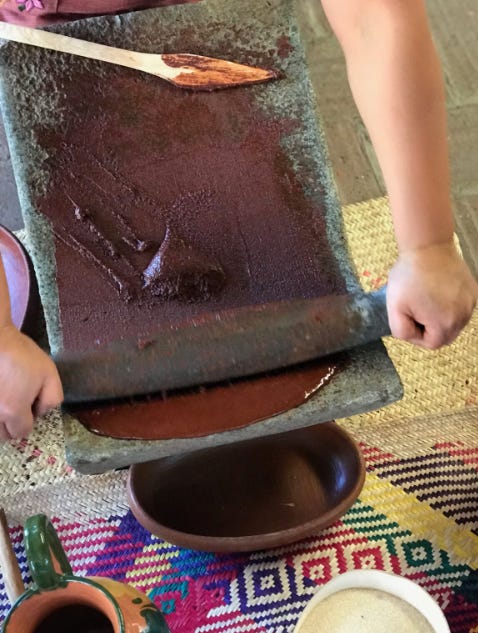
Cacao is prepared by women using a tilted granite table on legs called a metate, along with a granite rolling pin. As the pin is moved back and forth, the roasted cacao beans are ground into a thick paste, then moulded into balls and left to dry. Within minutes, they harden into rock-solid spheres that can be added to hot water to make traditional drinking chocolate. Originally, no sugar was added – only spices like vanilla, cinnamon, chilli, and sometimes maize to create a thicker consistency.
Grinding by hand on granite is hard labour, and even after extended grinding, the texture remains coarse. No surprise then that modern chocolate makers using stone grinders (melangers) keep the chocolate in the machine for up to three days non-stop. Imagine doing that by hand!
Spanish Dominance of Sicily
Sicily was under Spanish rule for about 500 years. Among many other things, the Spanish brought cacao from the New World and began adding sugar to the stone-ground cacao to reduce its bitterness.
Interestingly, while chocolate-making evolved throughout the rest of Europe – leading to the ultra-smooth textures we’re now used to – Modica retained the old, minimally processed methods, resulting in a uniquely rough texture.
To this day, Modica Chocolate must be made in the city itself, using only low heat and a short grinding process to preserve the natural flavours of the cacao.
Teeth-Ground Chocolate, Anyone?
In Modica, chocolate shops are as common as souvenir shops in other tourist towns. It seems everyone is making chocolate – some better (or worse) than others. Of course, just being in Modica doesn’t automatically make you a great chocolate maker (the same could be said for Belgian or Swiss chocolate – but that’s another story).
Don’t try to break a piece off a Modica chocolate bar. Don’t even think about biting into it. You’ll need a sharp knife – maybe even a hammer. It’s more like stone carving. The chocolate is very hard, but when struck, it can shatter into a million shards, glinting with sugar crystals.
Modica chocolate is also untempered. Aesthetically, it doesn’t compete with the glossy, smooth bars you might be used to. But there’s nothing wrong with it – it’s just different. In fact, it’s a great mindfulness exercise to observe the irregular patterns of cocoa butter and sugar bloom on its surface and interior.
Most Modica bars I’ve tried contain around 60% cocoa and are usually flavoured with at least cinnamon or vanilla. Many brands offer over ten varieties, featuring flavours such as prickly pear, red wine, local herbs, sea salt, and locally grown citrus fruits.
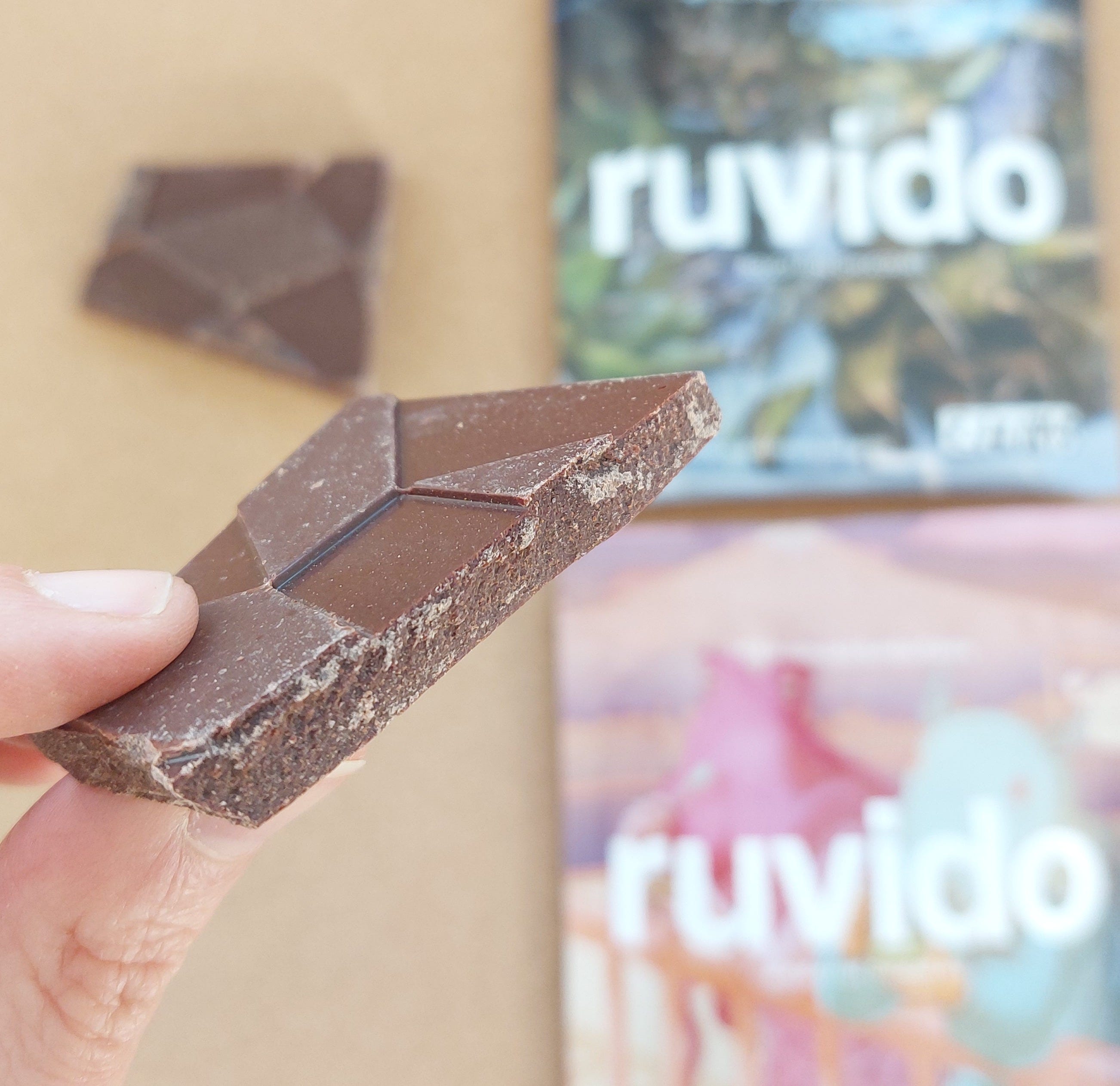
Once you manage to carve out a piece, it dissolves into a grainy, coarse paste in your mouth. You can literally feel the sugar crystals – you’re grinding the chocolate smoother with your own teeth. That is, if you’re patient enough to wait for the chocolate and sugar to melt.
If you rush it, all you’ll notice is an intense sweetness – the sugar hits you first, and the cocoa butter doesn’t have time to melt.
But if you give it time, the minimal processing and rougher texture allow for more dynamic flavour development. Aromas can be more intense, and fruitiness or acidity tends to be sharper – especially if roasting was kept on the lighter side. It can be a really exciting flavour journey.
In Sicily, I’ve only found one or two brands whose Modica-style chocolate lived up to the hype. My guess? The others simply don’t use very good cacao to begin with.
New Kid on the Block
A few weeks ago, I was contacted by Mattia, a young aspiring chocolate maker from Milan, northern Italy. He wanted to send me some of his bars to review ahead of launching his business.
He doesn’t claim to be making Mexican-style or Modica-style chocolate – instead, he refers to his work as a new approach, going against the mainstream of ultra-creamy bars. He keeps his two-ingredient, single origin chocolates at a larger particle size to allow for better flavour development.
Ruvido – Rough Fine Chocolate
This is a bold move. However revolutionary the idea is, most Europeans are used to perfectly smooth, creamy chocolate – so it may take some time to convince them that bigger particle size can create an entirely different flavour experience.
I’m not saying this method always delivers a better flavour, but it’s definitely different – and worth exploring.
My chocolate geek brain already wishes I could compare the exact same chocolate side-by-side in varying particle sizes: rough, medium-smooth, ultra-smooth. That’s how we’d really learn which version best expresses the cacao’s character and how it changes.
Anyway, I received three bars from Mattia and approached them as meticulously as I would when judging for a chocolate awards panel. And, as a content creator, of course I took photos from every possible angle before tasting.
Notes on Packaging
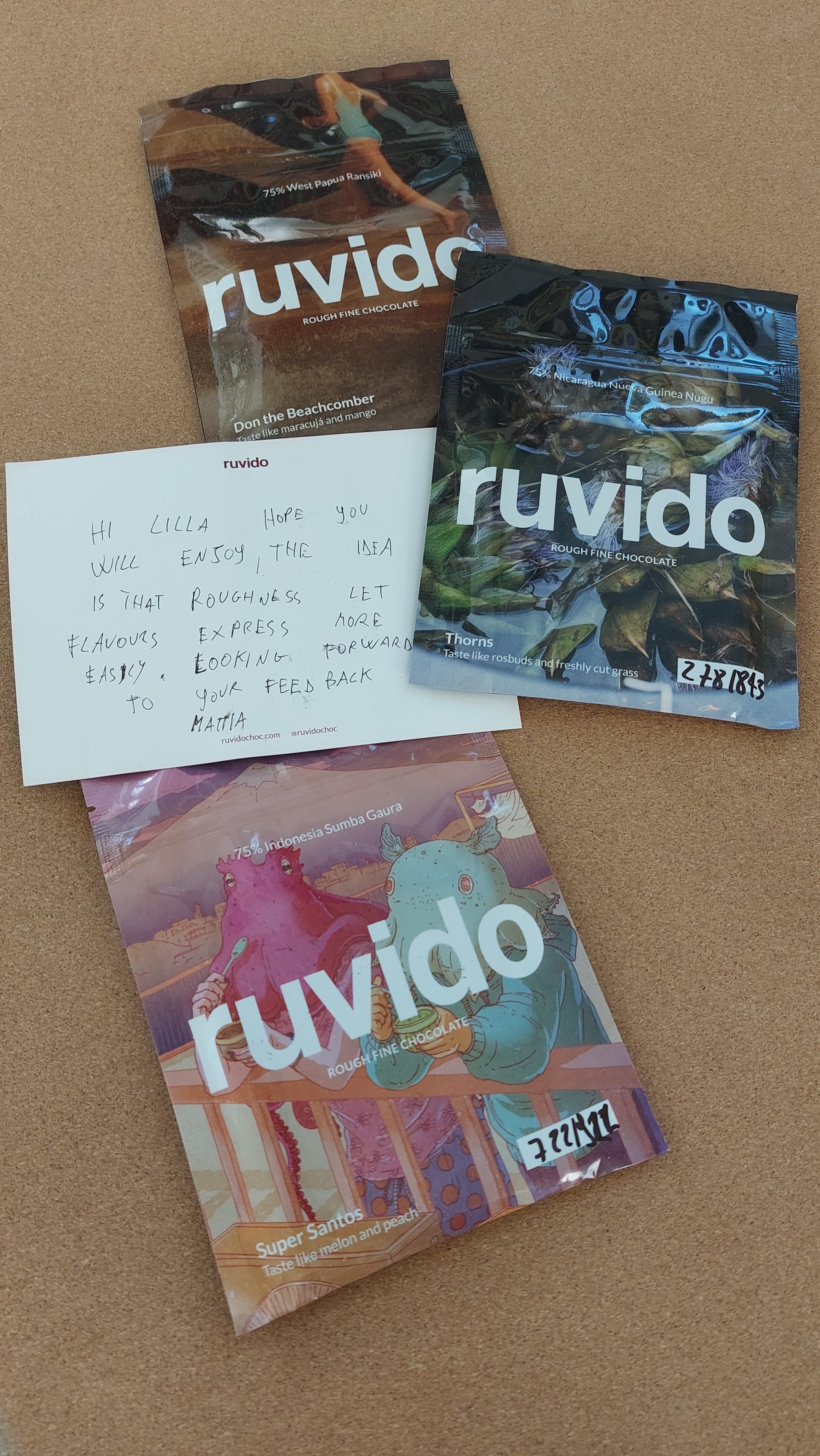
The bars come in resealable, recyclable plastic pouches with colourful graphics. Each is numbered, as they’re micro-lots (which, as the packaging reminds us, cannot be unlimited).
The design signals something fresh, unconventional. The name ruvido – meaning “rough” – ties directly to the texture. That said, the use of plastic feels slightly at odds with the roughness theme. Plastic is smooth and glossy. Recycled paper or thicker cardboard might better align with the message – but that’s a personal preference; I favour natural textures.
The resealable pouch is an excellent choice: practical, neat, and protective. It prevents spills, guards against aroma contamination, and helps preserve the chocolate’s own flavour after opening.
Each bar is named after the feeling or vibe it evokes, with a small hint of the flavour profile to expect. Let’s dive in.
Thorns – 75% Nicaragua Nueva Guinea Nugu
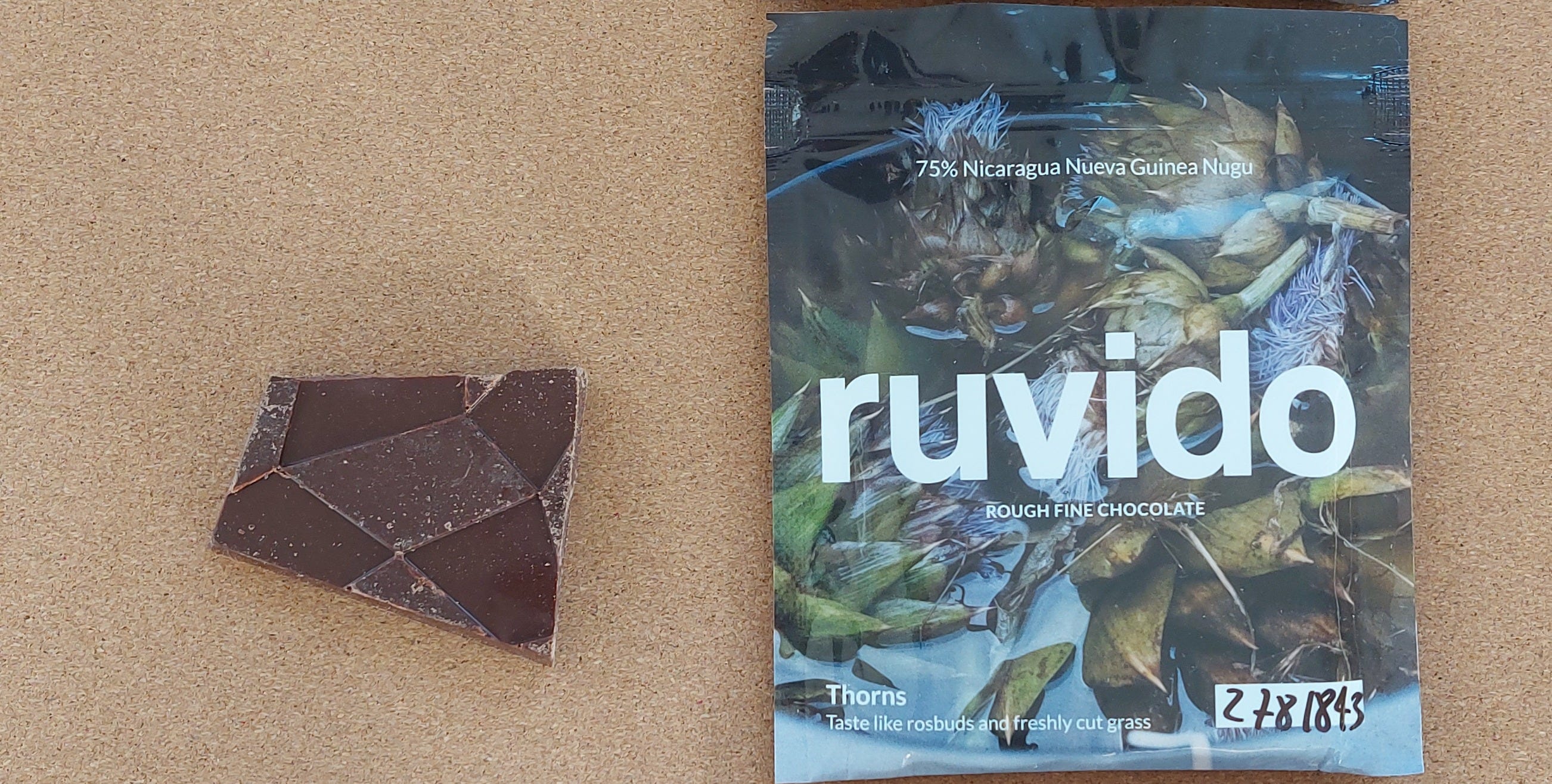
As soon as I opened the pouch, I caught a fruity aroma from 40 cm away. Promising start.
The square bars have a regular thickness, and the geometric shapes on the surface enhance the rough aesthetic.
I smelled cherries and passion fruit. “Bite – don’t munch,” the packaging warns. But curiosity got the better of me. I bit in, just to feel the texture. I chewed a little, then waited. The bar melted effortlessly, and the roughness felt perfectly balanced. I must admit, I’d expected a much coarser texture – probably because of my experience with Modica chocolate – so this was a pleasant surprise.
Even though the suggested notes were “rosebuds and freshly cut grass,” what I tasted was juicy raspberry hard candy – the kind with the liquid centre. As it melted, a sweet floral note emerged, but the overall impression was jammy.
A delicious chocolate with intense fruitiness – and it tastes sweeter than most 75% bars I’ve tried. Convincing.
Don the Beachcomber – 75% West Papua Ransiki
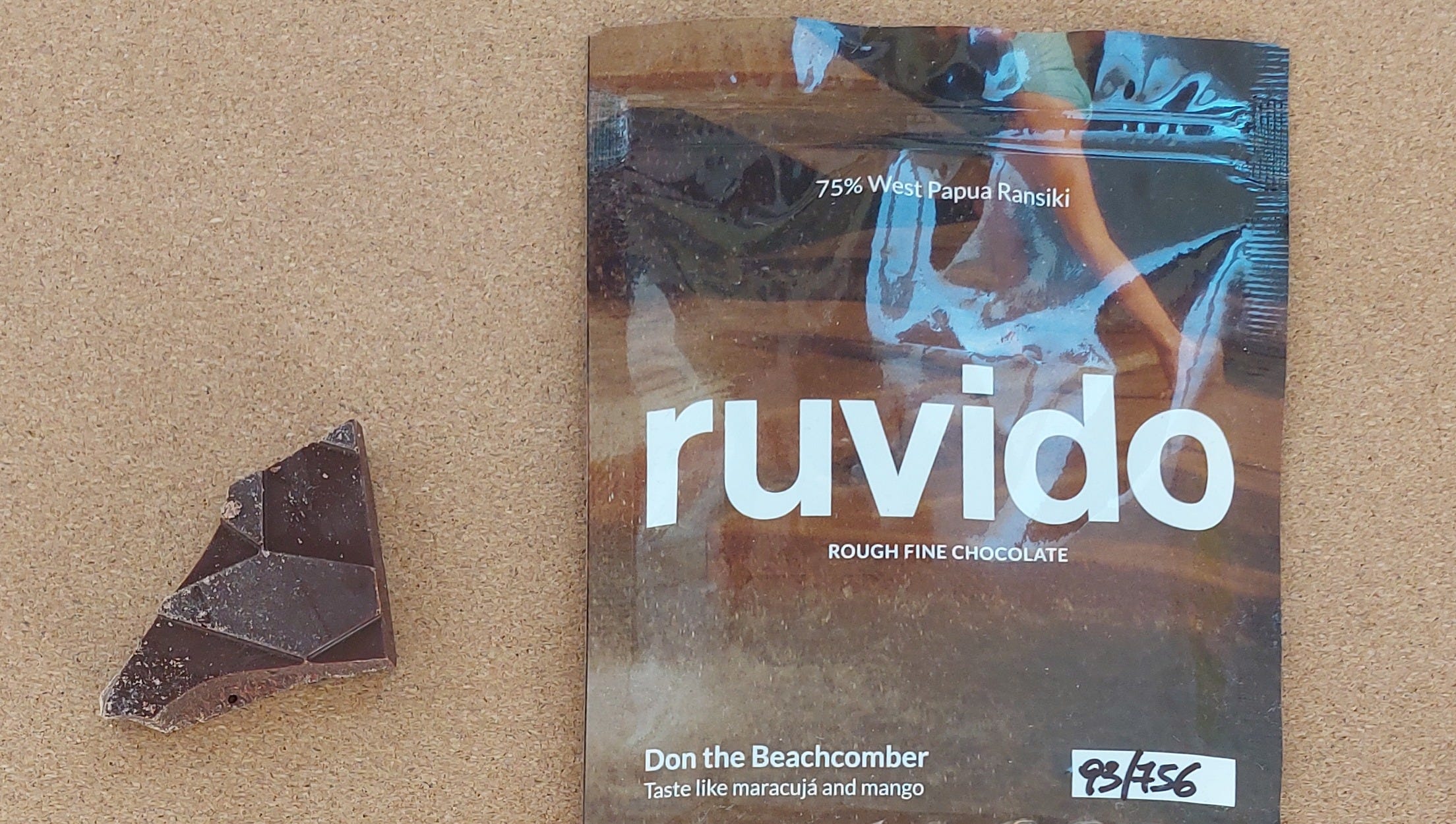
My curiosity peaked with this second bar. Again, intense aromas upon opening – this time, deeper, coffee-like notes. But the flavour headed in a different direction.
Sharp yet sweet. A tropical cocktail of passion fruit, fragrant yuzu, and a hint of jasmine. Such complexity in a single bite. It mellowed out gently – though the finish was perhaps a little short.
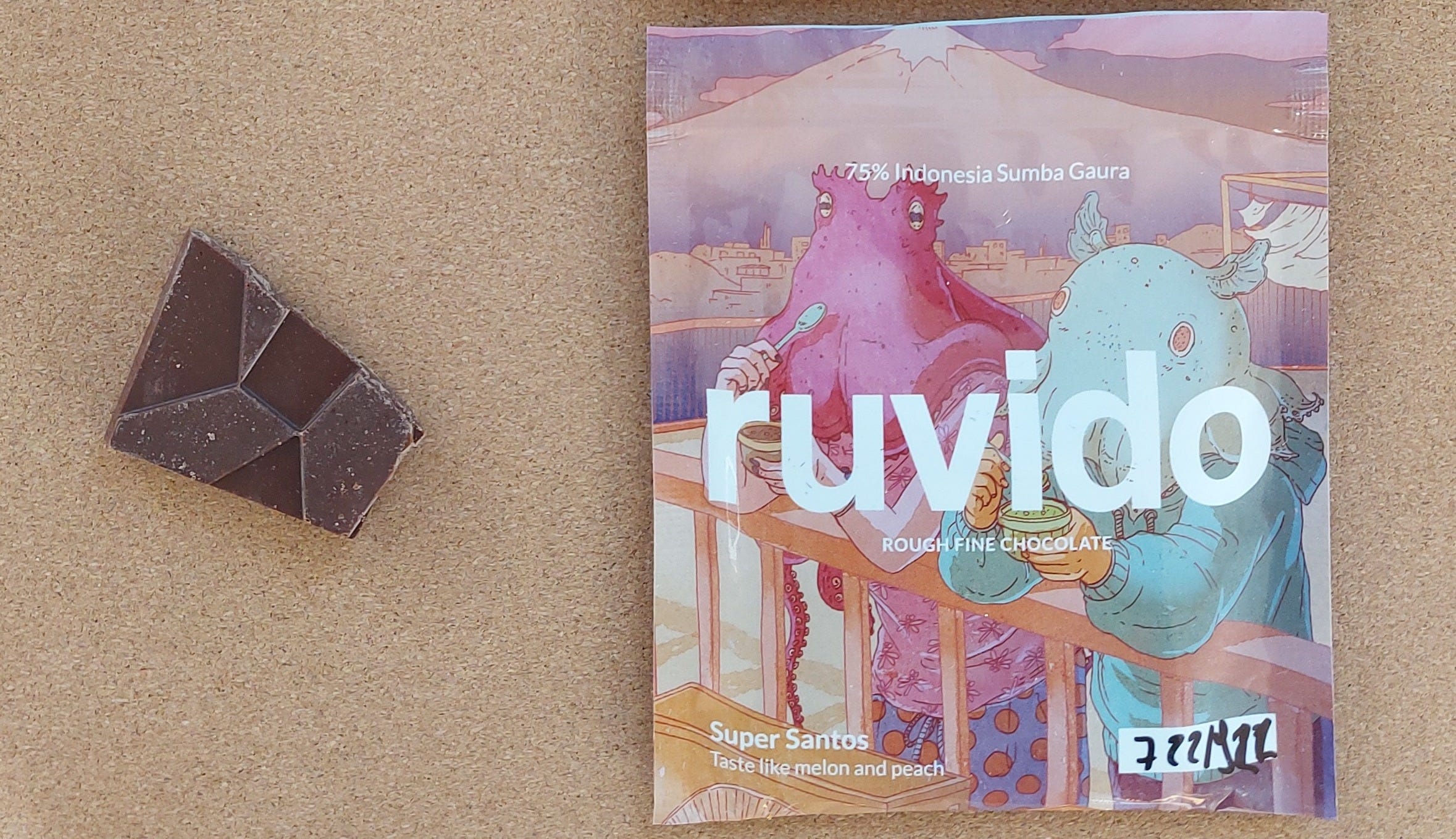
Super Santos – 75% Indonesia Sumba Gaura
I’m not sure what to make of the packaging graphics. Maybe I’ll just stick to reviewing the chocolate.
An immediate burst of sweet white fruits – peach and pear – followed by a rising acidity that overtakes the sweetness, morphing into something like fizzy tonic water: refreshing, citrusy, slightly bitter and astringent. Even minutes later, that tonic-like zing lingered in my mouth. It wasn’t unpleasant (I like tonic), but the sudden shift was a bit abrupt. Still, a fascinating flavour journey.
Why Particle Size Matters
What we’re really talking about here is particle size. As cacao and sugar are ground, their texture becomes smoother the longer they stay in the grinder.
Particle size is measured in microns (µm) – one micron is a millionth of a metre. What matters for chocolate tasting is that the human tongue has limited sensitivity to small particles. Below 20 microns, we can’t detect individual grains, so the chocolate feels smooth.
Take sugar as an example: coarse granulated sugar, fine sugar, and icing sugar all feel different in the mouth and melt at different speeds – even though chemically they’re the same. They can even taste different because of how fast they dissolve.
Now add cacao – composed of cocoa mass and cocoa butter – and you get even more variation. The shape, size, and interaction of these particles all contribute to the final mouthfeel and flavour release.
European-style chocolate tends to have a silky-smooth texture thanks to a particle size of around 15–20 microns. This might offer a more even melt and clean flavour delivery, but it can also limit perceived complexity or dynamic flavour development.
Rough Has Its Place
I really enjoyed these rougher bars. There’s definitely a time and place for this kind of texture. Maybe I’ll reach for something smoother when I need comfort, but when I’m feeling adventurous – or looking to break the monotony of everyday life – these bars are the perfect wake-up call.
There’s no right or wrong here. It’s all down to personal preference. What matters most is to keep trying, tasting, experimenting.
Stay open. Stay curious. Seek out new experiences. Challenge your assumptions.
Now tell me – what’s your take on smooth vs rough chocolate?
Lilla, thanks for sharing your perspective with us on the texture front. I love most those chocolate makers who are willing to take risks, re-invent the old styles into modern versions, and experiment with not-so-common ingredients. For me, this is where the artistry lies. Almost anyone can make a 70% Almond Incluision Bar. While there is a time and place for such, it's the inspiration and risk-taking that keeps me making chocolate. x, Lyn